
Imposter Syndrome

This blog is brought to you by Jennie Smythe, CEO & Founder of Girlilla Marketing.
We all owe Kenny Chesney and his team a big thank you.
For years—and really, since the inception of social networks—we’ve struggled with the back-and-forth of the imposter situation.
Not since your Granny got swindled into giving her credit card information to a telemarketer over her landline have we seen a bigger grift than the online celebrity imposter.
The difference here is that people are blaming—and even suing—the celebrity for being impersonated, rather than suing the criminal or looking harder at the platform where the victimization is taking place.
Why?
Because they can’t find the perp, and the platforms have significant legal protections.
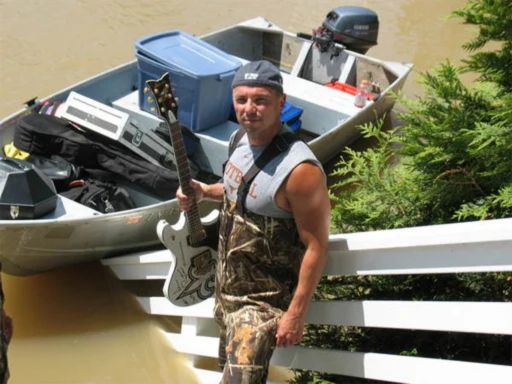
Just like when Kenny stood knee-deep in floodwater and helped bring much-needed media attention to Nashville in 2010, here he is again. His own digital ecosystem has come into question—and by fighting, rather quietly, to protect it, he may potentially be protecting all of us.
.png)
.png)
There are some important points here for everyday application.
Responsibility.
It’s crazy that I even need to type that. But that’s the biggest takeaway.
The court declined to create a general duty requiring celebrities to warn and protect fans from independent impersonators.
Funny thing is, we do.
How many videos or posts have you seen where a celebrity has to say, “This is my only profile,” or “Please don’t interact with any other profile you don’t see the blue check on”?
There are verified accounts. There are processes for us to report imposters. But there are also clunky procedures, ignored or denied verification requests, and a whole lot of manual labor required to find, report and follow up on fake accounts. As recently as last week, there are new options where if we want verification and protection... we are going to be asked to pay for it.
There are GOOD HUMANS at some of the platforms who help us escalate. But there aren’t enough of them, and there isn’t an easy path or plan to eradicate the problem any time soon.
I’ve written about, talked about and rallied for less work on us to prove who WE AREN’T and more responsibility and technology from the platforms to prove who their users ARE.
In what other situation does it make sense that a digital marketing person or artist representative needs to search for, identify and submit criminals online?
Is this not legal/law-enforcement territory? Why are the platforms allowing this in the first place?
Liability.
Almost every celebrity and even members of their teams are being impersonated, and most of us go through the available processes—yet we still can’t “fix it.”
The idea that knowing about it and trying to fix what we can with the tools we have could expose an artist or their team to liability simply because they discovered the scam is whacky.
If we discover a scam, it shouldn’t come with an admission that we’re responsible for fixing the entire problem.
If I’m standing in line at the bank and tell someone, “I think we’re getting robbed,” it doesn’t suddenly become my responsibility that we’re getting robbed.
Fear.
This is particularly interesting for those of us who help manage social accounts.
This decision reduces the fear that simply knowing about imposters means an artist or their team has undertaken a legal responsibility to find and eliminate every fake account.
It’s IMPOSSIBLE.
It’s whack-a-mole. It would require full-time, 24/7 triage coverage—and even then, as criminals become more sophisticated and move conversations off-platform or onto platforms that offer even fewer monitoring tools, we’re at a loss.
While this recent California ruling seems fairly grounded in common sense, we know better than to assume that anything wider-reaching nationally—or worldwide—couldn’t get funky.
And here’s the uncomfortable question:
If a celebrity starts to fear that monitoring, reporting or warning fans about fake accounts could somehow increase their potential liability, do we inadvertently create an incentive for artists and their teams to look the other way?
That goes against the entire ethos of our company and the clients who hire us to do right by their fans and followers.
I assume that sounds pretty bad to all of us, right?
So, what happens to the fan?
What course of action does a fan take after they’ve been victimized?
Catfishing isn’t new, and it certainly isn’t limited to celebrities. It’s happening across the internet in many, many forms.
Do people need to take responsibility for themselves? Of course they do!
Did Granny give her credit card number over her landline even after you told her not to? Of course she did.
Did Becky really think she was dating that guitar player she never met in person, who asked her for money and to run away?
Yikes. She may have.
But are scammers becoming smarter? Has AI made scamming exponentially more sophisticated? Are everyday people being taken advantage of at a scale that is impossible to ignore.
Yes, yes and more yes.
So, what do we do?
Friends, I don’t know.
I really don’t.
As you probably noted so far, I am obviously not a lawyer. I am not even a college graduate. I do not know Kenny and have no actual knowledge of the case outside of what I’ve read.
Every ounce of the law that I’ve remotely been able to understand, every term and condition from all of the sites we work within, every policy that comes around with relevance to our field, every code in this sphere is confusing—and creates a real Who’s on First? situation.
So let me try to break this down to one fundamental thought:
The artist and the fan are both getting scammed.
And instead of pointing at the scammer—or asking harder questions of the platform where the scam is happening—we’re starting to point at each other because we’re the only ones we can see and, ironically, trust.
.png)
If you want some light reading, may I suggest starting here:
Section 230: https://www.congress.gov/crs-product/R46751
Take It Down Act: https://www.congress.gov/bill/119th-congress/senate-bill/146
And here are a few more musings from your dropout buddy:
- The platforms have far greater technology and access to detect scams at scale than a digital marketing company, management company or artist representative does.
- There’s a gap here—a giant gray area—and maybe the answer is that everybody has a role to play. Platforms. Artists. Teams. Law enforcement. Fans. Real, actual lawyers and content owners (labels, publishers, studios…). Yes, even Granny. Let’s all do what we can.
- This is so much bigger than any one celebrity or artist. If we get this right, the protections could benefit all of us.
Also, the impersonation business is booming. Consumers are losing billions of dollars to impersonation scams.
That’s a lot of Grannys!
I’m a capitalist and sure would like to see those funds willingly spent in the entertainment business.
I, for one, am grateful Kenny Chesney did us all another favor by wading into these waters.
Because ultimately, this isn’t really a Kenny Chesney problem. It isn’t even a celebrity problem.
It’s a trust problem.
And artists and fans shouldn’t be left fighting each other while the “people” actually committing the crimes disappear behind fake profiles.
My hope is that this case gets more of us invested in finding meaningful solutions—and puts the responsibility where it belongs—so that artists and fans can spend a little less time figuring out who’s real and a lot more time actually connecting with each other.
Be good... online and in real life,
Jennie
Blog

Sign up
Musings from me whenever I feel like it. In the meantime, be good…online and in real life. - Jennie